
Blog
-
Emerging locality of network influence
Posted on
by
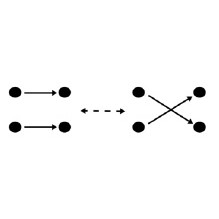
Complex systems of many components – the internet, economies, cells, ecosystems, and so on – depend on the rich web of interactions among many parts. In analysing such systems, however, it is natural that scientists often want to rank the components in
-

Naive Probabilism and Covid-19
Posted on
by
In the early weeks of the 2020 U.S. Covid-19 outbreak, guidance from the scientific establishment and government agencies included a number of dubious claims – masks don’t work, there’s no evidence of human-to-human transmission, and the risk to the public is low.
-

The Global Inequality Boomerang
Posted on
by
Since the late 1980s, global income inequality has fallen by most common definitions, largely due to the changing economic relationships between nations, including the rapid rise of China and India as economic centres.
-
Stability of heteroclinic cycles in rings of coupled oscillators
Posted on
by
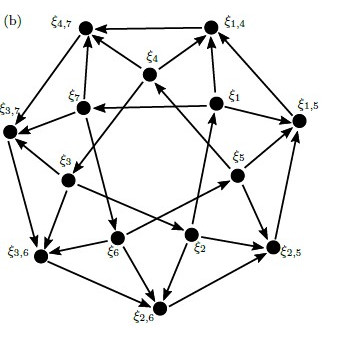
Complex networks of interconnected physical systems arise in many areas of mathematics, science and engineering. Many such systems exhibit heteroclinic cycles – dynamical trajectories that show a roughly periodic behaviour, with non-convergent time averages.
-
Learning a weather dictionary of atmospheric patterns using Latent Dirichlet Allocation
Posted on
by
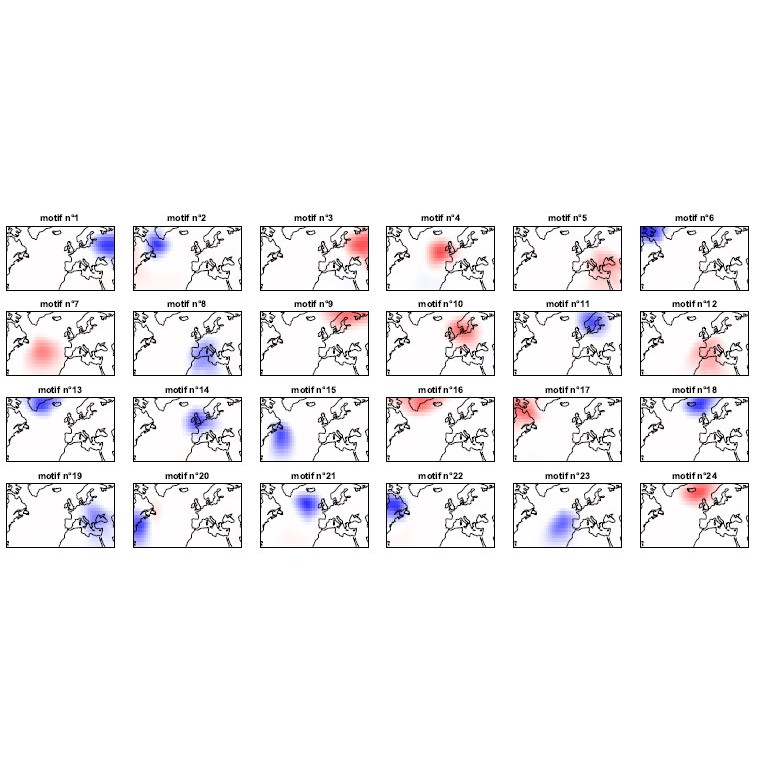
The mid-latitude atmospheric circulation is challenging to describe due to the turbulent and chaotic nature of the underlying flow, driven by the unstable dynamics of the jet stream. In general, the phase space of such turbulent geophysical flows appears to be large.
-

Metrics and Mechanisms: Measuring the Unmeasurable in the Science of Science
Posted on
by
How does science work? What are its core mechanisms? In recent decades, research has increasingly explored such questions using a variety of quantitative metrics which can be easily calculated from publications. But some of these can be deceiving.
-

Ranking earthquake forecasts using proper scoring rules: Binary events in a low probability environment
Posted on
by
Probabilistic earthquake forecasts can be used to estimate the chance of future earthquake hazards, or to model important risk quantities including the number of fatalities, damaged elements of infrastructure or economic losses. The Collaboratory for the Study of Earthquake Predictability (CSEP)
-

Measuring Unfair Inequality: Reconciling Equality of Opportunity and Freedom from Poverty
Posted on
by
Over the past few decades, rising income inequality has spurred debates around the world. While many call for policies to help redistribute wealth and counter inequality, others argue that inequality is actually necessary to both motivate and reward hard work and economic
-
Inference on the History of a Randomly Growing Tree
Posted on
by
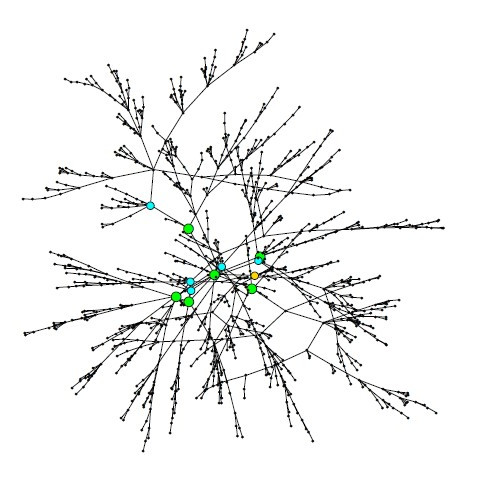
The skeletal outlines of many natural processes resemble growing tree-like networks. Examples include the movement of a disease through a human community, news or rumours through social media or a computer virus through a web of connected computers. The elements in these
-

Interview with LML Laboratory Director Colm Connaughton
Posted on
by
As a new feature of the LML blog, I will be running a series of occasional interviews with some of the LML Fellows and other individuals linked to the laboratory. This is an interview with Colm Connaughton,