
Blog
-

Epidemic spreading with awareness and different timescales in multiplex networks
Posted on
by
Efforts to control epidemics rely on mathematical and computational models of how infectious agents spread. Such models help to find ways to deter transmission – through vaccination and quarantine, for example, or information campaigns to alter human behaviour.
-

Age representation of Lévy walks: partial density waves, relaxation and first passage time statistics
Posted on
by
Mathematical models of Lévy Walks have found many recent applications to physical and biological systems, and such applications have generally approached Lévy Walks from the traditional perspective of discrete models for random walks.
-
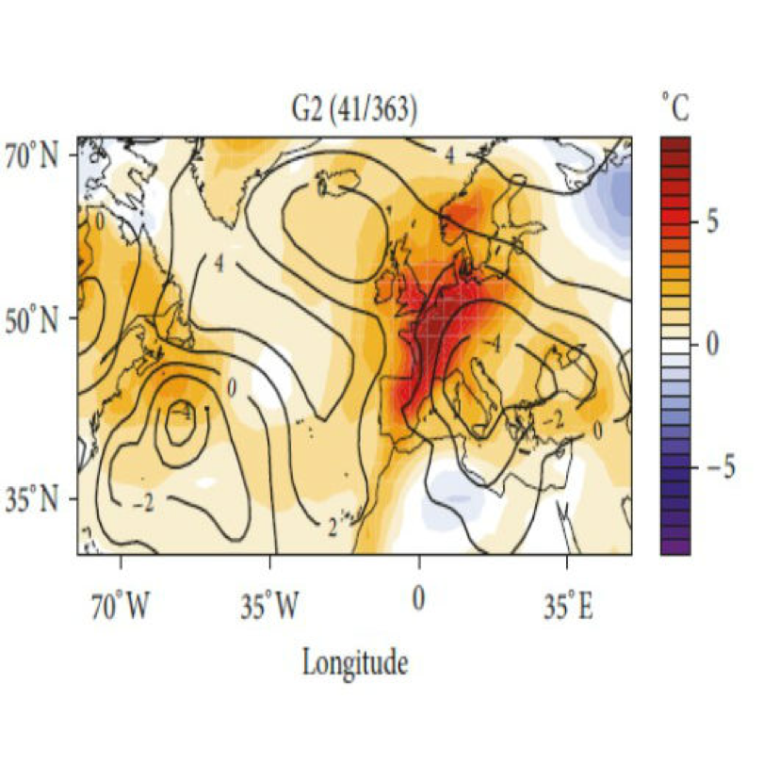
Atmospheric Dynamics Leading to West European Summer Hot Temperatures Since 1851
Posted on
by
In Western Europe, several recent summers have been exceptionally warm, especially the summers of 2003 and 2015. Based on observations over the past century, meteorologists have come to see such major heat events as typically stemming from anticyclonic atmospheric circulation and a
-

Microfoundations of Discounting
Posted on
by
Economists routinely model how people choose between different options. For example, a common issue is time delay: would you choose to receive £100 today, or prefer £200 next month?
-

Generalized dimensions, large deviations and the distribution of rare events
Posted on
by
Any fractal set possesses a unique dimension, which characterises its self-similar behaviour under a change of scale. The attractors of many dynamical systems are more complex multifractals, which possess a spectrum of dimensions, or “generalized” dimensions.
-
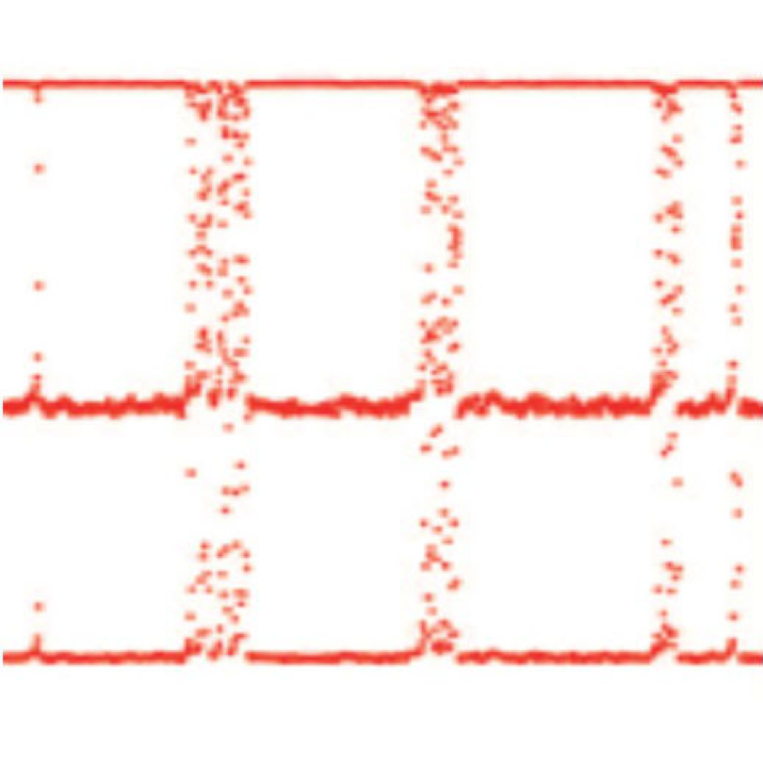
Dynamical characterization of stochastic bifurcations in a random logistic map
Posted on
by
The interaction of noise and non-linearity can cause sharp dynamical transitions, as appear in phenomena such as stochastic resonance or noise-induced synchronization or chaos.
-

First passage and first hitting times of Lévy flights and Lévy walks
Posted on
by
In many areas of science and applied mathematics, important events often get initiated when a stochastic variable crosses a threshold value. Financial assets may be sold at a particular price, or a chemical reaction initiated when two particles come close enough.
-

Recurrence Spectra of European Temperature in Historical Climate Simulations
Posted on
by
Climate events linked to extremes of temperature (heatwaves/cold spells) have severe impacts on human health and natural ecosystems. Over the past few decades, the frequency and intensity of heatwaves have increased in Europe.
-
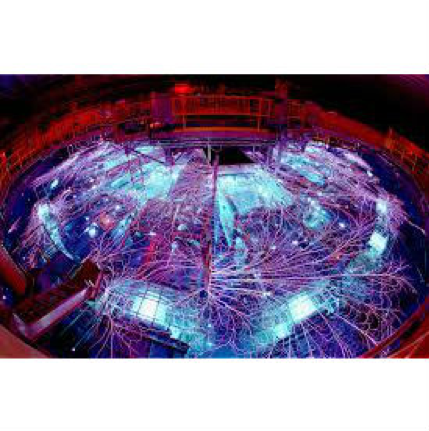
The aromatic universe, new hope for public transport, and why we’re still years away from practical fusion energy
Posted on
by
Here are links to a few recent articles by LML External Fellow Mark Buchanan.
-

Seismological investigations of induced earthquakes near the Hutubi underground gas storage facility
Posted on
by
Earth scientists have long known that fluid injected into the Earth’s crust can induce earthquakes. In principle, seismic activity may also be triggered through gas extraction through the mechanism of poroelastic stress perturbation, although such events have been observed less frequently.